





Uluwatu Temple: Bali’s Most Dramatic Cliffside Sanctuary


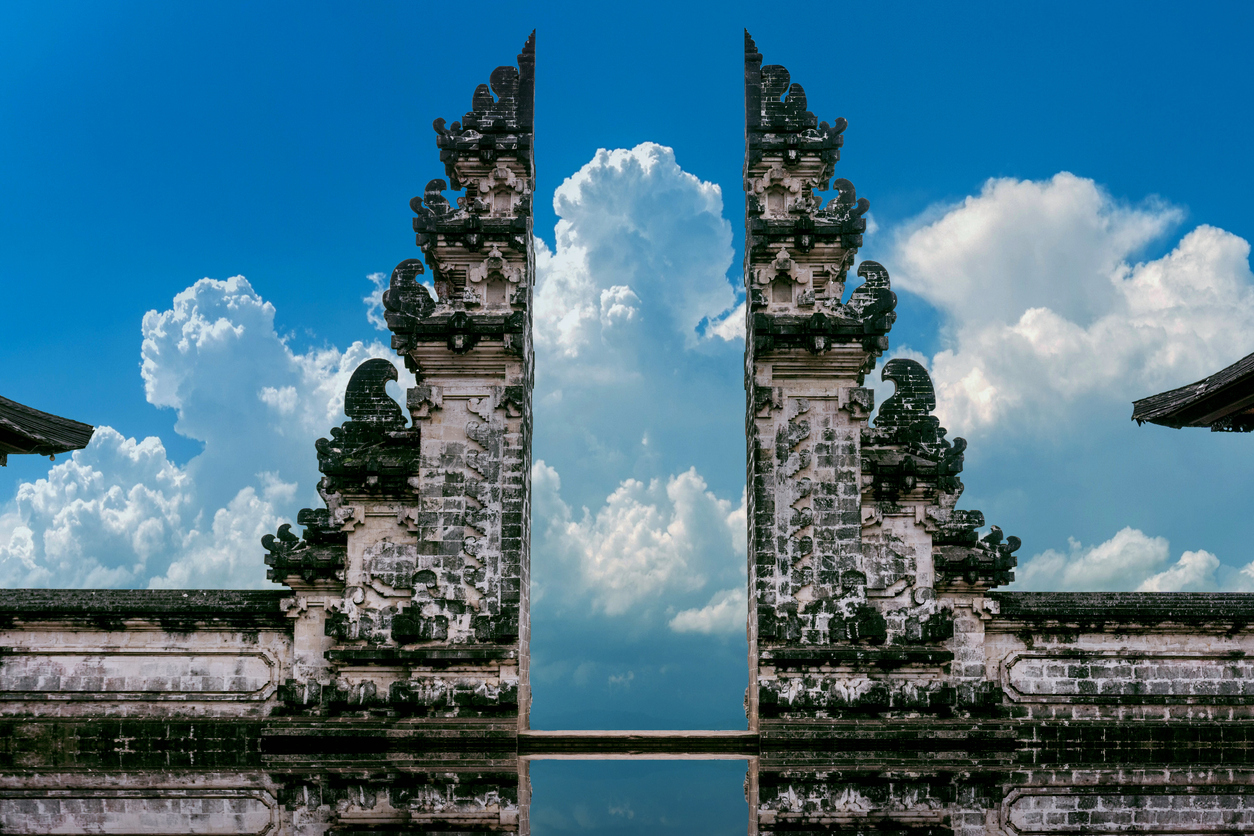
There are places in Bali that feel beautiful, and then there are places that feel elemental. Uluwatu Temple belongs to the second category. Perched on a sheer limestone cliff roughly seventy meters above the Indian Ocean, this sea temple does not simply sit in the landscape — it defines it. Waves crash against the rocks below, wind whips along the pathways, and the horizon stretches unbroken toward Africa. Visiting Uluwatu Temple is not just another stop on a Bali itinerary; it is an encounter with scale, spirituality, and the raw drama of nature.
Most travelers arrive in the late afternoon, chasing the legendary sunset that has made Uluwatu Temple Bali one of the island’s most photographed landmarks. But beyond the golden light and Instagram silhouettes lies something deeper: centuries of devotion, myth, and ritual that still shape daily life in southern Bali. The temple is known locally as Pura Luhur Uluwatu, one of the six key directional temples believed to protect the island from evil sea spirits. Whether you come for culture, scenery, or ceremony, Uluwatu Temple rewards those who slow down and pay attention.
The History of Pura Luhur Uluwatu
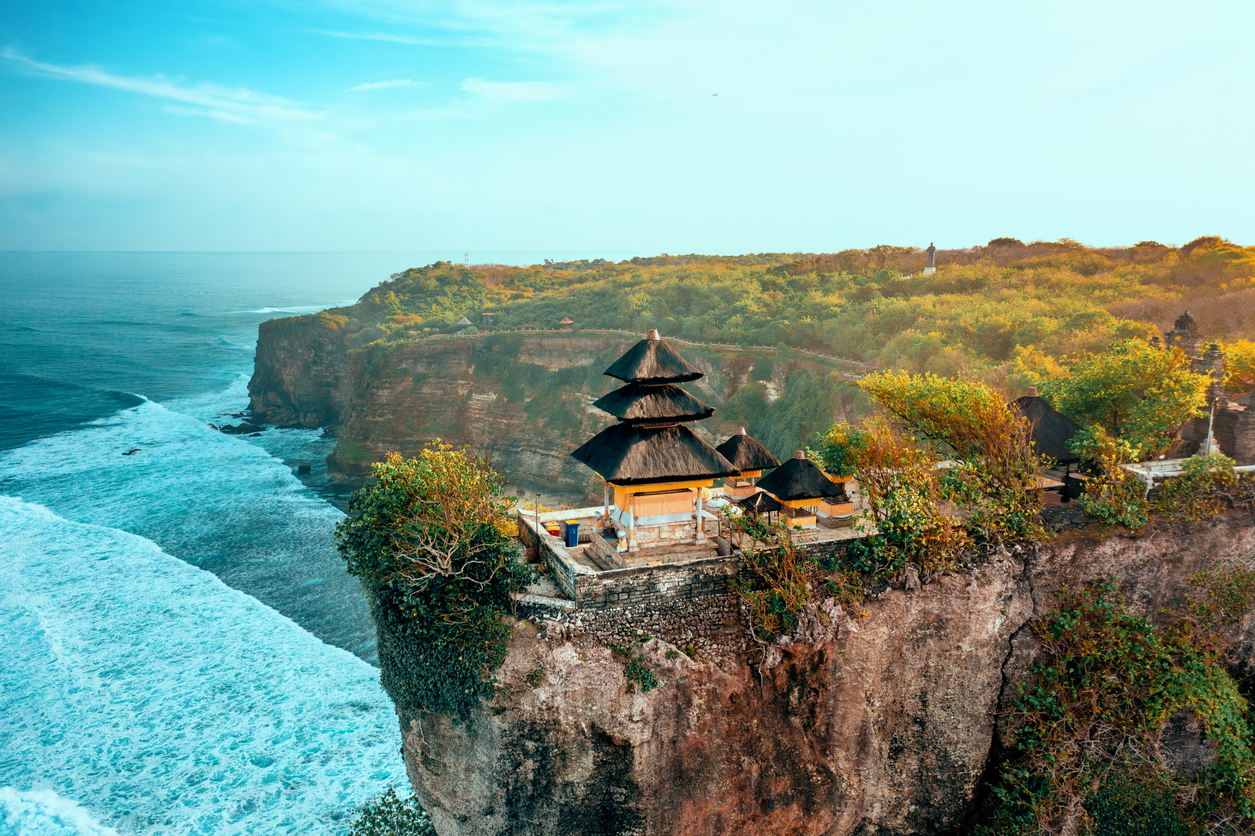
The origins of Pura Luhur Uluwatu trace back to the 11th century, though the temple gained prominence in the 16th century thanks to the revered Javanese priest Dang Hyang Nirartha. According to Balinese tradition, Nirartha achieved moksha — spiritual liberation — at this very cliff, dissolving into divine light above the ocean. The temple’s name reflects its setting: “pura” means temple, “luhur” means something of divine origin, “ulu” refers to the land’s edge, and “watu” means rock. Together, they describe a sacred structure built on the edge of a stone cliff.
Unlike many inland temples surrounded by rice paddies or jungle, Uluwatu Temple Bali faces directly into the open ocean. Its location is not accidental. In Balinese Hindu cosmology, the sea represents powerful, untamed energy. By placing one of Bali’s principal temples here, the spiritual guardians symbolically anchor and balance that force. Even today, ceremonies continue regularly, and locals arrive in traditional dress with woven baskets of offerings. Visitors are welcome to explore the outer grounds, but the inner sanctum remains reserved for prayer, preserving the temple’s living religious function.
Why Uluwatu Temple Feels Like the Edge of the World
Approaching Uluwatu Temple is an experience in anticipation. The path curves through low forest, inhabited by famously mischievous macaques, before opening suddenly to reveal the cliffline. The drop is dramatic and immediate. There are no gradual slopes or gentle beaches below — only vertical rock and relentless surf. Standing along the stone pathways, you feel suspended between earth and sky. The ocean wind carries salt and the distant roar of waves, creating an atmosphere that is at once peaceful and intense.
This is why so many travelers describe Uluwatu Temple sunset as unforgettable. As the sun lowers toward the horizon, the limestone cliffs glow in warm amber tones while the sky shifts through pink, violet, and deep orange. Silhouettes of temple gates and traditional meru towers frame the light. The view is expansive yet intimate, making it one of the most iconic sunset experiences in Indonesia. Even when crowded, there is a shared sense of reverence that quiets the space in the final minutes before dusk.
Uluwatu Temple Sunset: What to Expect
Timing is everything when planning your visit. Uluwatu Temple opens in the morning, but the late afternoon remains the most sought-after window. Arriving around 4:30 p.m. allows time to explore the cliff paths before securing a seat for sunset. The light begins to soften about an hour before the sun touches the water, and photographers often position themselves along the western edge for unobstructed views. Because the temple faces southwest, the sun appears to melt directly into the sea during certain months of the year.
Crowds are common, particularly in high season, yet the vastness of the cliff walkway prevents the atmosphere from feeling claustrophobic. Walking slowly around the perimeter offers shifting perspectives: sometimes the temple appears distant and monumental; at other angles, it feels tucked delicately into the rock face. The interplay between architecture and natural landscape is what makes Uluwatu Temple Bali distinct from other Balinese sea temples. It is not merely decorative — it is sculpted into the geography itself.
The Famous Uluwatu Temple Kecak Dance
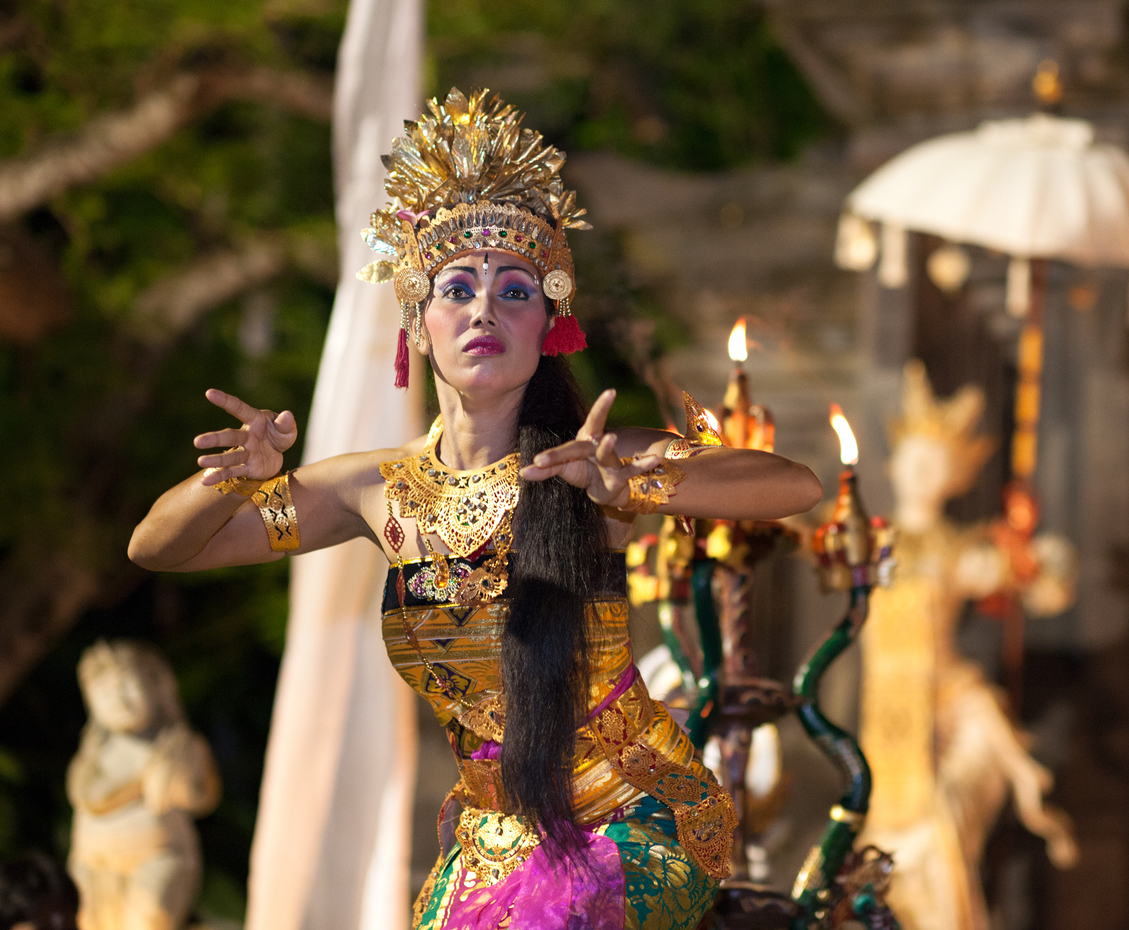
No visit to Uluwatu Temple would be complete without witnessing the renowned Kecak performance staged at sunset. Often referred to as the Uluwatu Temple Kecak Dance, this dramatic ritual theater retells episodes from the Ramayana epic. Unlike other Balinese dances accompanied by gamelan orchestras, Kecak relies entirely on a large male chorus chanting “cak-cak-cak” in rhythmic waves. The effect is hypnotic and percussive, echoing across the cliff as darkness settles.
The performance takes place in an open-air amphitheater overlooking the ocean, ensuring that sunset becomes part of the stage design. As the sky darkens, torches are lit and the fire dance segment begins, adding visual intensity to the storytelling. Tickets are sold separately from the Uluwatu Temple entrance fee, and seating is first-come, first-served. Arriving early is advisable, especially during peak travel months. Even if you are not typically drawn to staged cultural shows, the combination of chanting, fire, and ocean backdrop makes this experience uniquely powerful.
Practical Guide: Entrance Fee, Dress Code & Opening Hours
Planning a smooth visit to Uluwatu Temple Bali requires understanding a few logistical details. The Uluwatu Temple entrance fee is modest compared to many international attractions and includes access to the cliff pathways. Payment is made at the gate, and additional tickets are required for the Kecak performance. Opening hours typically begin in the morning and extend into early evening, though sunset remains the highlight period.
A sarong and sash are mandatory for entry, reflecting respect for the temple’s sacred status. If you are wearing shorts or a short skirt, you will be provided with a rental sarong at the entrance. Shoulders should also be covered. These guidelines apply to all visitors regardless of background. While the outer grounds are open to tourists, the inner sanctum is restricted. Observing local customs and moving calmly through ceremonial spaces enhances the experience and maintains harmony between visitors and worshippers.
Monkey Safety Tips at Uluwatu Temple

The macaques living around Uluwatu Temple are both entertaining and notorious. They are accustomed to visitors and have learned to identify loose sunglasses, hats, and phones as potential targets. While most encounters are harmless, vigilance is important. Avoid carrying visible snacks, secure your belongings, and maintain a calm demeanor if approached. Temple staff are experienced in retrieving stolen items, often negotiating with the monkeys using fruit.
Despite occasional mischief, the monkeys contribute to the atmosphere of the site. They move along the cliff edges with effortless balance, embodying the wild energy of the landscape. Observing them from a respectful distance adds another layer to the visit. As with any wildlife interaction, patience and awareness go a long way toward ensuring a safe and enjoyable experience at Uluwatu Temple.
How to Get to Uluwatu Temple Bali
Located on the Bukit Peninsula in southern Bali, Uluwatu Temple is accessible by scooter, private driver, or taxi. Traffic can be heavy during late afternoon, especially from areas like Seminyak or Canggu, so allocating extra travel time is wise. From Jimbaran or Nusa Dua, the journey is shorter and generally smoother. Parking is available near the entrance, though it can fill quickly close to sunset.
For travelers seeking comfort and efficiency, hiring a private driver for the afternoon is often the easiest solution. Many visitors combine Uluwatu Temple sunset with dinner at a nearby cliffside restaurant or seafood café in Jimbaran. Planning the sequence in advance prevents rushed transitions and allows the temple visit to unfold at a relaxed pace.
See Uluwatu from the Sky: A Helicopter Perspective
While most people experience Uluwatu Temple from the cliff path, viewing it from above reveals an entirely different dimension. The limestone coastline curves dramatically along the peninsula, and from the air, the temple appears almost suspended over the ocean. Helicopter flights along Bali’s southern coast offer sweeping views not only of Uluwatu Temple Bali but also of nearby beaches and surf breaks.
Companies such as Balicopter provide private helicopter tours that can transport guests directly to or over major landmarks across the island. Arriving by air eliminates traffic concerns and transforms the journey into part of the adventure. For proposals, anniversaries, or professional photography sessions, this perspective elevates the experience beyond the ordinary. Seeing Uluwatu Temple from above highlights how precariously and beautifully it sits at the meeting point of land and sea.
Related Tours




Things to Do Around Uluwatu Temple
The surrounding Bukit Peninsula offers more than just the temple itself. Hidden beaches like Suluban and Padang Padang attract surfers with consistent waves and dramatic cave entrances. Cliffside cafés provide panoramic dining experiences, while beach clubs host sunset sessions that contrast spiritual serenity with contemporary energy. Combining Uluwatu Temple with nearby coastal exploration creates a well-rounded day in southern Bali.
Exploring the area before or after your temple visit also spreads out your schedule, reducing time pressure during peak sunset hours. Early mornings are ideal for beach walks, while late afternoons can focus on the temple and Kecak performance. The diversity of experiences within a short radius underscores why Uluwatu Temple Bali is often considered the cultural and scenic centerpiece of the peninsula.
Photography Tips for Uluwatu Temple
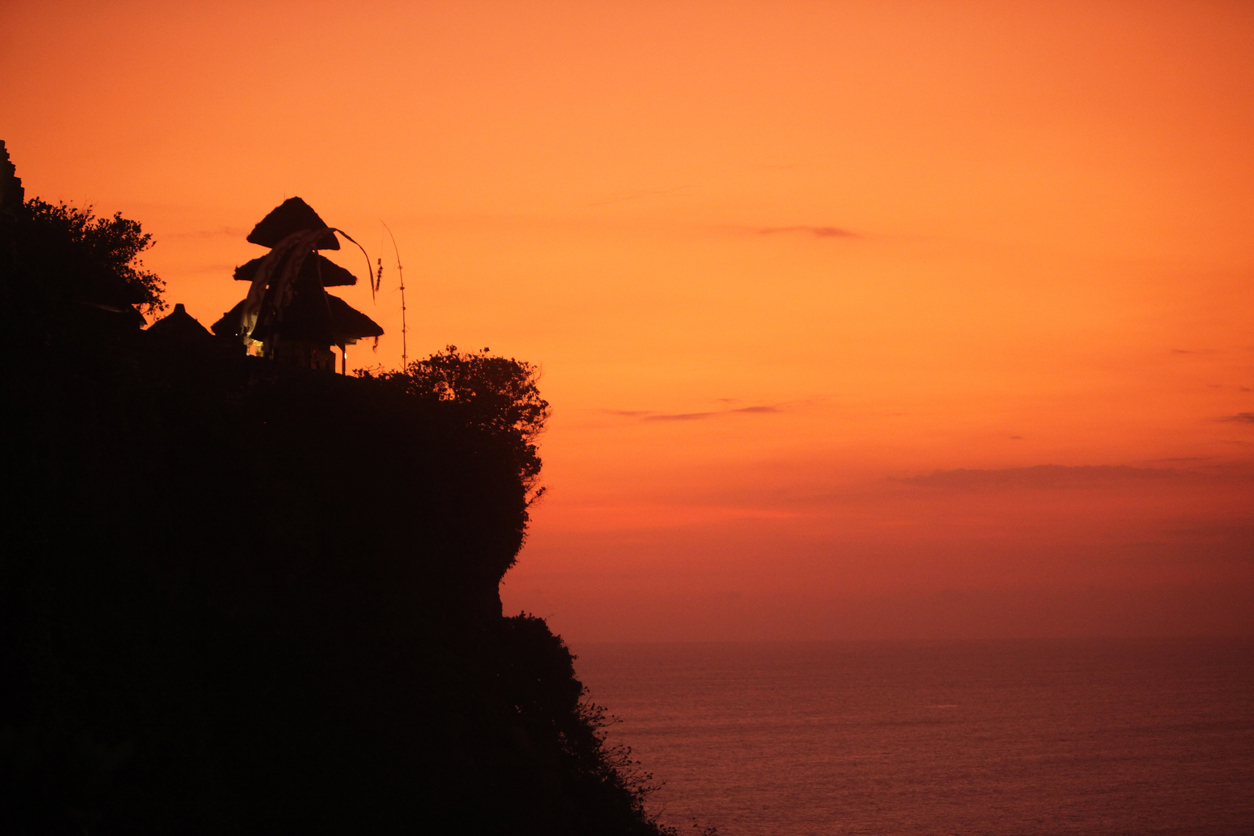
Capturing Uluwatu Temple effectively requires attention to light and composition. Wide-angle lenses emphasize the height of the cliffs, while telephoto lenses isolate temple details against the horizon. Golden hour provides the most flattering tones, though overcast days can produce dramatic, moody skies. Positioning yourself slightly below the main gate structures creates layered depth in photographs.
Drones are typically restricted due to the sacred nature of the site and safety concerns along the cliffs. Respecting these rules preserves the atmosphere for everyone. Patience is key; waiting a few moments between groups of visitors often yields unobstructed frames. Whether shooting professionally or casually, Uluwatu Temple sunset offers abundant creative possibilities.
Is Uluwatu Temple Worth Visiting?
For travelers seeking cultural depth combined with breathtaking scenery, Uluwatu Temple consistently ranks among Bali’s most rewarding destinations. It is not an interactive museum nor a theme park attraction; it is a living place of worship shaped by centuries of belief. The interplay of ocean, wind, and architecture creates an experience that feels both ancient and immediate.
Those expecting ornate interiors or extensive guided explanations may find the visit visually focused rather than educationally dense. However, the power of Uluwatu Temple lies in its setting. Few places on the island offer such a visceral sense of standing at the boundary between earth and sea. Whether you come for the Uluwatu Temple Kecak Dance, the sunset, or quiet contemplation along the cliff, the memory tends to linger long after you leave.
Final Thoughts on Uluwatu Temple Bali
In a destination filled with temples, beaches, waterfalls, and rice terraces, Uluwatu Temple manages to remain singular. Its dramatic perch above the Indian Ocean, combined with enduring spiritual significance, makes it more than a scenic viewpoint. It is a symbol of Bali’s balance between nature and devotion. Watching the sun disappear beyond the horizon while chants from the Kecak chorus echo in the evening air encapsulates the island’s layered identity.
Visiting Uluwatu Temple is not simply about checking off a landmark. It is about experiencing Bali at one of its most powerful edges — where cliffs meet waves, tradition meets spectacle, and sky meets sea in a daily ritual of light. Whether approached by winding road or soaring helicopter, Uluwatu Temple Bali stands ready to leave a lasting impression on every traveler willing to stand still and look outward.
See more Blog Posts




.svg)

.svg)
.svg)
.svg)

